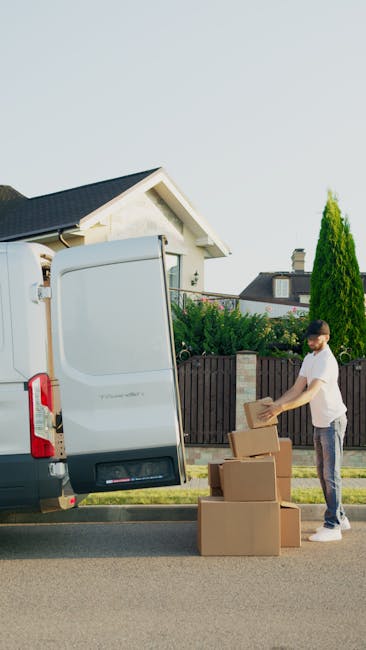
Burnt Oak to Edgware moving route tips for removal vans

If you are planning a move between Burnt Oak and Edgware, the route can look simple on a map and still feel awkward on moving day. A removal van is not a small car, after all. You need enough space for loading, a sensible travel time, and a route that avoids unnecessary stress, tight turns, and last-minute parking drama. This guide on Burnt Oak to Edgware moving route tips for removal vans walks you through the practical stuff that actually matters, from route planning and timing to van size, access checks, and the small decisions that make a big difference.
Truth be told, most moving headaches on a short local journey come from poor preparation rather than the drive itself. The good news? With a bit of planning, this is the kind of move that can feel orderly rather than chaotic. Let's make it easier.
- Why the route matters
- How the move works in practice
- Key benefits and practical advantages
- Who this is for
- Step-by-step guidance
- Expert tips
- Common mistakes to avoid
- Tools, resources and recommendations
- Law, compliance and best practice
- Options and comparison table
- Case study
- Practical checklist
- Conclusion
- Frequently asked questions
Why Burnt Oak to Edgware moving route tips for removal vans Matters
On paper, Burnt Oak and Edgware are close. In real life, that does not automatically mean easy. Removal vans need room to manoeuvre, clear access for loading and unloading, and a route that won't turn a straightforward house move into a slow crawl with stress building in the cab.
This matters because local moves are often judged too casually. People think, "It's only a few miles." Then the van arrives, the street is narrower than expected, parking is restricted, and the lift is smaller than the sofa. Suddenly the short move becomes the difficult one.
Good route tips are not about obsessing over every turn. They are about reducing friction. A sensible route can help you:
- save time during loading and unloading
- reduce the chance of parking penalties or access issues
- protect fragile items by avoiding stop-start chaos
- make the move feel calmer for everyone involved
If you are using a professional team, the route still deserves attention. A skilled crew can move quickly, but only if the vehicle can get close enough to the property and the day has been planned properly. That is where services like removals and removal van support can make a practical difference.
How Burnt Oak to Edgware moving route tips for removal vans Works
The route itself is usually only one part of the job. A good moving plan looks at the whole chain: packing, loading, vehicle access, travel, and unloading. For a Burnt Oak to Edgware move, the simplest route may be the best route, but that depends on the size of the van, the time of day, and the property layout at both ends.
Think of it like this: the best route for a family car is not always the best route for a tall, loaded van with furniture strapped inside. A route that looks slightly longer but offers better access or easier turning can actually be the smarter choice. Not glamorous, no. Effective, yes.
Typical route planning should consider:
- road width and turning space for the vehicle
- height restrictions, if any
- traffic patterns around school times and commuter peaks
- loading bay or kerbside access near the property
- whether the destination has controlled parking or permit restrictions
For some moves, especially flats or smaller home relocations, a flexible service such as man and van or flat removals is enough. For larger households, you may need a bigger vehicle, maybe even a moving truck, plus a crew that knows how to handle bulky items safely.
Key Benefits and Practical Advantages
A well-planned route is not just about getting from A to B. It affects the whole moving day, and often in ways people only notice once things go wrong. When the route is properly thought through, you get a move that feels less rushed and more controlled.
Here are the main benefits, in plain English:
- Better timing: fewer delays means your move stays on schedule.
- Easier loading: van positioning near the entrance reduces carrying distance.
- Lower damage risk: fewer awkward lifts and fewer rushed movements.
- Less stress: the team can focus on safe handling rather than improvising.
- Smarter cost control: fewer delays can reduce labour time and avoid repeat trips.
There is also a subtle but important advantage: confidence. When the route, access, and van size are all aligned, everything feels more manageable. You can actually breathe. Tiny luxury, but a real one.
If you are comparing different service levels, look at the support offered through removal services, home moves, or packing and boxes. Sometimes the route is only half the story; the packing quality and loading order matter just as much.
Who This Is For and When It Makes Sense
This kind of route planning helps almost anyone moving between Burnt Oak and Edgware, but it is especially useful if you are dealing with tight time windows, limited parking, or a lot of furniture.
You will benefit most if you are:
- moving from a terraced house, flat, or maisonette with limited kerb access
- using a removal van for the first time and unsure about local access
- moving during a busy weekday or school run period
- relocating a family home, office, or student property
- transporting awkward items like wardrobes, tables, or fragile electronics
It also makes sense if you are weighing up whether you need full removals or a smaller vehicle solution. A student, for example, may only need student removals. A business on a tight timetable may need office removals or broader commercial moves. Different moves, different pressure points.
And if the timing is awkward, say you have to move fast because of a lease handover or delayed access, a same-day option may be worth discussing. That is where same-day removals can come into the picture, though availability will naturally depend on the day.
Step-by-Step Guidance
Below is a practical way to plan the route and the move without making the day feel overcomplicated. Keep it simple. Simple usually wins.
- Check both addresses for access. Look at the street width, any tight turns, steps, shared entrances, and whether the van can park close enough to the door.
- Measure the awkward items. Sofas, beds, wardrobes, mirrors, and white goods should be measured before the day. The front door frame does not care how much you paid for the sofa.
- Choose the right vehicle. For smaller loads, a van may be enough. For bigger family moves, a larger vehicle or truck can save time and reduce trips.
- Plan the travel window. In a busy part of North West London, even a short journey can take longer at the wrong time of day. Early morning often works better, though not always for every household.
- Reserve loading space if needed. If the property is awkward for parking, think ahead about where the vehicle will stop and how items will be carried.
- Load in a sensible order. Heavy, stable items go in first. Fragile things should be secured separately, not tucked in at the last second because there was "a bit of space".
- Protect the unload point. Have keys ready, doors open where appropriate, and furniture routes cleared inside the new property.
- Do a final walk-through. Check cupboards, loft spaces, under beds, and sockets. People forget one charger, one box, one drawer. Every time.
A useful rule of thumb: if the route saves five minutes but makes unloading ten minutes harder, it is probably the wrong route. Better access beats clever shortcuts most days.
Expert Tips for Better Results
After you have done enough local moves, certain patterns become obvious. The van route is not just about roads; it is about flow. The whole process needs to move smoothly from property to vehicle to property again.
Here are the practical details that often make the biggest difference:
- Use a smaller vehicle when access is tight. A compact van can sometimes save more time than a larger one because it gets closer to the entrance.
- Avoid peak congestion where possible. School-run times and the main commute window can make even short hops frustrating.
- Keep a box of essentials separate. Tea bags, kettle, phone charger, medication, and keys should not end up in the back of the van under a mattress.
- Check whether the destination has stairs or lift restrictions. This is especially relevant for flat removals.
- Ask about insurance and handling. For valuable items, confidence in the crew matters a lot. A quick look at insurance and safety can help you understand how responsibility is approached.
One thing people often overlook: the weather. A dry morning is one thing. A damp stairwell or a bit of drizzle on smooth pavement is another. Not a disaster, just an extra reason to slow down and handle things properly.
If you are moving a special item, such as an upright piano or another heavy, sensitive piece, route planning becomes even more important. In those cases, piano removals is the kind of service that reflects the added care needed.
Common Mistakes to Avoid
Most moving problems are boringly predictable. That is the annoying part. Fortunately, that also means you can avoid them.
- Assuming the shortest road is the best route. Sometimes the shortest route has worse access, sharper turns, or parking problems.
- Not checking parking in advance. This one causes a lot of avoidable delay. The van may arrive before the parking plan does, and then everyone is standing around.
- Packing too late. If boxes are half-finished on the morning of the move, the route is no longer your only issue.
- Using the wrong van size. Too small means repeat trips. Too large can mean tricky access.
- Forgetting to protect furniture. Blankets, wraps, and proper strapping are not optional if you care about corners, frames, and surfaces.
- Ignoring building access rules. Some apartments and managed properties have loading rules, lift booking times, or entrance restrictions.
Another common slip is underestimating how long hand-carry distance adds up. Fifty extra metres does not sound like much. Then you repeat that twelve times with boxes, and suddenly it is all anyone can talk about.
If you need help with the heavy lifting side of things, a specialist team from house removals or house removalists can make the process much smoother.
Tools, Resources and Recommendations
You do not need a complicated toolkit to manage a local move well. But a few practical items and planning habits can make a real difference.
Useful items to have ready:
- strong moving boxes in mixed sizes
- packing tape and a marker pen
- blankets, wraps, or protective covers for furniture
- strap ties or load restraints where appropriate
- a doorstop for easier carrying during loading and unloading
- water and snacks, because moving day always lasts longer than you think
Useful planning habits:
- make a room-by-room inventory
- label boxes by room and priority
- keep paperwork, keys, and charging cables separate
- take quick photos of cable setups before dismantling them
- confirm access details with the mover the day before
For the packing side, packing and unpacking services can be helpful if you want less manual work and a cleaner handover at the destination. If you are moving only a few items or a smaller load, man with van and man with a van options may be more suitable.
Law, Compliance, Standards, or Best Practice
For a local home move, you usually do not need to worry about complex legal procedures, but there are still sensible standards to follow. In the UK, best practice around removals usually comes down to safety, clear communication, and responsible vehicle use.
That means checking a few things before moving day:
- whether the vehicle is appropriately insured for the job
- whether loading is done safely and without overloading the van
- whether the crew can move items without causing avoidable damage
- whether any building, landlord, or management rules need to be followed
- whether waste or unwanted furniture is handled responsibly
If you are disposing of unwanted items rather than moving them, a service such as furniture pick up or furniture removals may be more appropriate than simply loading everything into the van. That can help you stay organised and avoid carrying clutter into the new home.
For businesses, care with compliance and working hours matters even more. Office moves often need smoother coordination, quieter disruption, and clear handling procedures. This is where office relocation services can be worth considering.
It is also wise to review terms and conditions and the provider's approach to payment and security. Not because something will go wrong, necessarily, but because it is better to know the ground rules before the first box is lifted.
Options, Methods, or Comparison Table
Choosing the right moving method depends on how much you are moving, how accessible the properties are, and how much help you want on the day. Here is a simple comparison.
| Option | Best for | Strengths | Limitations |
|---|---|---|---|
| Man and van | Small to medium loads, short local moves | Flexible, often cost-effective, easier for tighter access | May not suit large family homes or heavy furniture sets |
| Full removals service | Whole-house moves, more furniture, more packing | More support, better for bulky items, less hands-on effort | Usually more involved and may need more planning |
| Removal truck hire | People who want to manage the loading themselves | Control over timing and handling | Requires more labour from you and your helpers |
| Storage + staged move | Delayed completion, decluttering, temporary gap between homes | Useful when dates do not line up neatly | Extra planning and possible extra cost |
Sometimes the smartest route tip is not a road tip at all. It is choosing the moving method that matches the day. If your load is modest and access is decent, removal truck hire or a smaller vehicle may be enough. If dates are messy, storage can take pressure off the schedule.
Case Study or Real-World Example
Here is a realistic local scenario. A couple moving from a first-floor flat near Burnt Oak to a terraced property in Edgware had a fairly modest load: bed frame, mattress, two wardrobes, a sofa, boxes of books, and kitchen items. Nothing dramatic. But the flat had a narrow stairwell, and the new street had limited parking.
Instead of treating it as a simple short hop, they planned the move in a more thoughtful way. The van was arranged for early morning, the parking spot was checked the day before, and the heaviest furniture was dismantled in advance. Boxes were labelled by room, and fragile items were packed separately. The result? The loading was steady, not rushed, and the team avoided repeated trips up and down the stairs.
The interesting bit was not the distance. It was the access. Once the parking and stairwell issues were understood, the move became much more manageable. That is the whole point of route planning for removal vans: it helps the day behave, instead of wobbling all over the place.
Had the couple ignored access and used a larger vehicle than necessary, they would probably have spent more time repositioning and carrying than they expected. Small detail, big difference.
Practical Checklist
Use this checklist the day before, or even a week before if you want a quieter morning.
- Confirm both addresses and postcodes.
- Check for parking restrictions or permit needs.
- Measure large furniture and doorways.
- Choose the right van size or removal vehicle.
- Pack fragile items separately and label clearly.
- Set aside essentials for the first 24 hours.
- Clear walkways inside both properties.
- Book help for heavy or awkward items.
- Review insurance, safety, and payment details.
- Leave a little time buffer. Always.
If you are moving a smaller load, a local man and van service may be the right fit. If you are moving a family home or something more complex, you may want a fuller package from removal companies or a tailored removal services arrangement.
Get a free quote today and see how much you can save.
Conclusion
Burnt Oak to Edgware moving route tips for removal vans are really about one thing: making a local move feel straightforward instead of scrambled. The road itself is only part of the challenge. Access, van size, timing, parking, packing, and the order you load everything all shape the outcome.
If you plan the route with the property layout in mind, you reduce the little frictions that usually cause the biggest hassle. That means fewer delays, less lifting, and a calmer day overall. And honestly, on moving day, calm is worth quite a lot.
Whether you need a simple van, a fuller removals package, or help with packing and storage, the best move is the one that fits your real situation. Keep it practical, keep it flexible, and give yourself a bit of breathing room. You will thank yourself later.
A good move should feel like progress, not punishment. That is the goal, really.
Frequently Asked Questions
What is the best route for removal vans between Burnt Oak and Edgware?
The best route is usually the one that balances access, road width, and traffic conditions rather than simply being the shortest on a map. For removal vans, easy turning and safer parking often matter more than shaving off a minute or two.
How early should I plan the moving route?
Ideally, check the route and access details a few days before moving day. That gives you time to spot parking restrictions, narrow streets, or stairwell issues before they become a problem.
Is a small van better than a large removal truck for this route?
It depends on the load. A small van can be better for tight streets and flat access, while a larger vehicle may be more efficient for bigger household moves. The right choice is the one that suits both the route and the amount of furniture.
What should I do if parking is limited at either address?
Check whether a loading bay, permit, or temporary space can be used. If access is still tricky, tell the mover in advance so they can plan vehicle positioning and carrying distance properly.
Do I need help with packing as well as transport?
If your move includes fragile items, a lot of household contents, or limited time, packing support can be very useful. Services such as packing and unpacking can reduce stress and help keep the van load organised.
What are the biggest mistakes people make on local removal routes?
The biggest mistakes are assuming the shortest route is best, ignoring parking, leaving packing too late, and using the wrong vehicle size. Those are the usual culprits. Boring, but true.
Can I use a man and van service for a Burnt Oak to Edgware move?
Yes, if your load is relatively small or you are moving from a flat or a single room. A man and van service is often a practical choice for shorter local moves with manageable access.
What if I need storage between moving out and moving in?
Storage can help if your move-out and move-in dates do not line up neatly. It is especially useful when you need a staged move or want to reduce clutter before settling into the new place.
Are there special considerations for flat removals?
Yes. Flats often involve stairs, lifts, shared entrances, and tighter corridors. That means route planning and access checks are even more important than they would be for a ground-floor house.
How can I make moving day less stressful?
Prepare early, label boxes clearly, keep essentials separate, and choose a vehicle and route that suit the property rather than forcing a one-size-fits-all approach. A little organisation goes a long way, even if the day still feels a bit hectic.
Should I choose removals or truck hire for a local move?
If you want professional help with loading, carrying, and route planning, removals is usually easier. If you are comfortable doing more of the work yourself, truck hire may suit you better. The best option depends on how much support you need.
What if I need help with furniture disposal too?
If some items are not going to the new property, look at furniture removal or furniture pick up options. That can help you avoid taking unnecessary clutter with you and keep the move more efficient.
Small move, yes. But still worth doing properly.